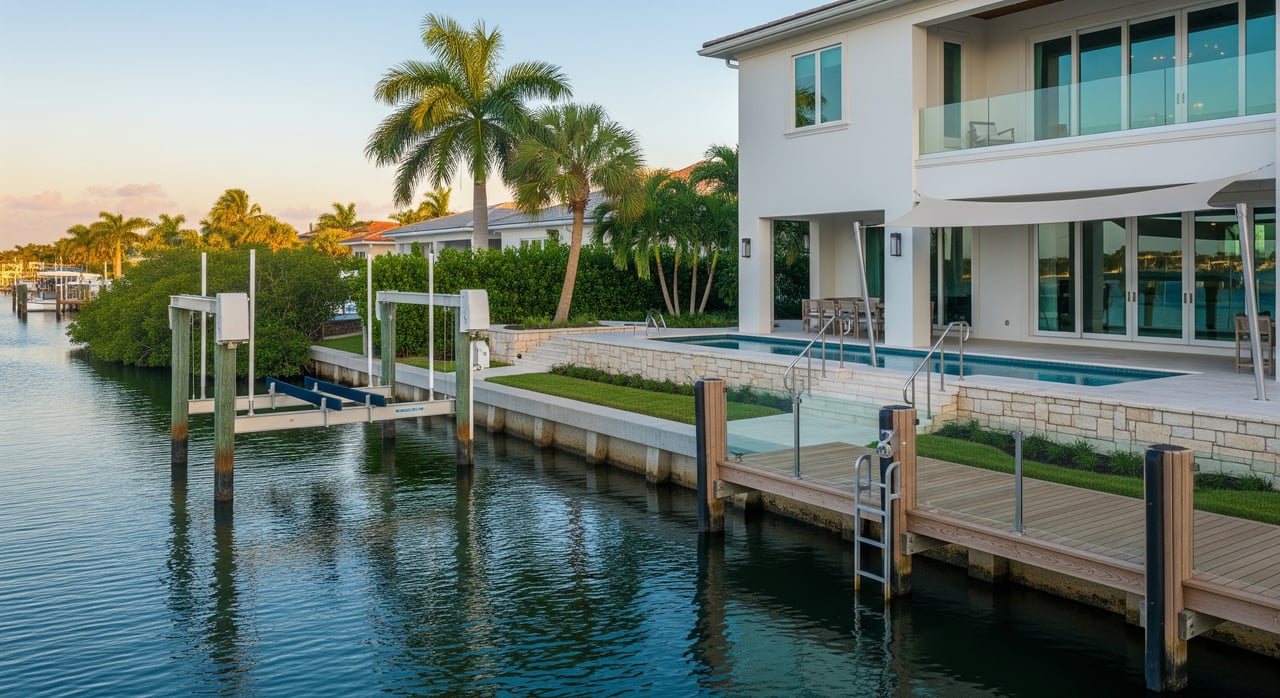
Ever pictured stepping from your backyard onto your boat, only to realize the tide decides your timing? If you’re exploring canal living in St. Petersburg, you’re smart to ask how tides, bridges, and seawalls affect everyday life and long-term value. In this guide, you’ll learn what a tidal canal home is, how local tides and bridges shape boating access, and exactly what to check before you buy. You’ll also get trusted local resources and a simple checklist you can use on your next tour. Let’s dive in.
What a tidal canal home means in St. Pete
A tidal canal home sits on a canal that connects to a larger tidal waterway. In St. Petersburg, that usually means a canal system tied to Boca Ciega Bay or Tampa Bay, and ultimately the Gulf of Mexico. “Tidal” means water levels and currents in the canal rise and fall with the astronomical tide, plus weather factors like wind and pressure.
These canals are part of a microtidal estuary system. Tides here are smaller than open ocean locations, yet still important for navigation, dock clearance, and flood risk. Salty, brackish water also brings marine growth on pilings and hardware, which affects maintenance.
If you want to verify water levels and depths, start with NOAA tide predictions and nautical charts. Tide tables show water surface elevation at Mean Lower Low Water and Mean High Water. Charts help you spot shallow areas or canal entrance shoaling. For official flood zone information, use the FEMA Map Service Center.
- Check NOAA tide predictions for local tide times and ranges.
- Review NOAA nautical charts for depths and bridge data.
- Confirm flood zones on the FEMA Map Service Center.
How tides shape daily life and boating
Tides and canal access
Tide range affects when you can leave and return, how your boat meets the dock, and whether you have enough depth at low tide. Even small differences matter if your boat has a deeper draft. Weather can also shift conditions. Strong onshore winds or passing fronts can temporarily raise or lower water levels beyond the predicted tide.
Bridges and vertical clearance
If your route to the bay includes fixed bridges, air draft matters. Bridges publish a vertical clearance at Mean High Water. A boat that fits at low tide may not fit at high tide. Some bridges are movable and may open on a schedule. Always verify whether your route requires openings and if those openings are on demand or scheduled.
- Know your boat’s air draft from the waterline to the highest point.
- Compare that to published bridge clearance at the correct tidal datum.
- Plan trips around tides when clearances are tight.
Boat draft and hull type
Your boat’s draft is the depth below the waterline. Compare that number to the shallowest point in your canal route at low tide. Shallow-draft boats like flats skiffs, bay boats, and small center consoles are often a better match for narrow tidal canals. Deep-keel sailboats can be challenging unless the canal and route are dredged and charted.
Also consider your drive type. Sterndrives and outboards can be vulnerable in very shallow water, especially in chop. Propeller clearance and cavitation are real risks if you push the margins.
Everyday routines and safety
Tides can guide your schedule. Morning departures or sunset returns may fall near low or high water, which affects clearance and handling at the dock. Floating docks ride with the tide and can make boarding easier. Fixed docks require careful line settings so your boat stays secure across the full tidal range.
Storms can push water into canals and increase surge risk. Seawall elevation and property elevation are important for flood insurance planning and safety. Always check the flood zone and base flood elevation before you buy.
Docks, lifts, and seawalls: what to check
Waterfront structures look simple at a glance. In reality, docks, lifts, and seawalls are engineered systems with permits, electrical components, and hardware exposed to saltwater. A careful inspection protects your investment.
Permits and approvals
Work on docks, lifts, pilings, and seawalls typically needs multiple approvals. Expect local building permits, county environmental reviews, and sometimes state or federal permits if work affects submerged lands. Florida DEP and the US Army Corps of Engineers regulate certain shoreline and in-water work.
- Confirm past permits with the City of St. Petersburg building permits office.
- Review environmental requirements with Pinellas County Environmental Management.
- For state and federal oversight, consult Florida Department of Environmental Protection and the US Army Corps of Engineers regulatory program.
Dock types and materials
- Fixed docks: Pile-supported and sturdy, often used where tidal range is modest. Longevity depends on pile condition and quality of construction.
- Floating docks: Rise and fall with the tide and can simplify boarding. Require robust anchoring and hardware.
- Materials: Treated timber, composite, aluminum, and plastic floats each have different lifespans and maintenance profiles in saltwater.
Look for warped or soft deck boards, corroded hardware, loose cleats, and pilings with marine growth or damage. Ask for installation dates and maintenance records.
Boat lifts and electrical safety
Lift type and capacity should match your boat. Check the rated capacity, last service date, cable condition, and signs of rust. Electrical components must be marine-grade, with GFCI protection and proper bonding.
- Inspect lift motors for corrosion and water exposure.
- Confirm proper shore power, breaker locations, and grounding.
- Ask your insurer about any lift requirements for storm season.
Seawalls and shoreline condition
Common seawall types include poured concrete, precast concrete panels, vinyl sheet piling, timber bulkheads, and riprap. Signs of stress include leaning or bowing, cracks, spalling concrete, exposed tiebacks, and erosion at the wall’s base.
Seawall replacement is a major cost and often triggers a permit review. Ask for repair history, prior engineering reports, and any seawall surveys. Determine who maintains the wall if it is shared or part of an HOA system.
Environmental rules and dredging
Shoreline work often intersects with protected resources. Mangrove trimming or removal usually requires permits and sometimes mitigation. Many canals experience natural shoaling. Dredging typically requires permits and can be done by a county, neighborhood association, or owners. Confirm responsibilities and schedules in writing.
Insurance and storm planning
Canal-front homes are frequently in mapped flood zones. Lenders may require flood insurance in Special Flood Hazard Areas. Coastal construction and wind mitigation rules can affect premiums. Verify the flood zone and base flood elevation and review any past flood claims.
Buyer checklist for St. Pete tidal canals
Use this checklist when touring areas like Waterway Estates and other St. Petersburg canal neighborhoods.
Before the showing
- Confirm the canal connects to Boca Ciega Bay or Tampa Bay, and whether access is direct or through a canal system.
- Check the property’s FEMA flood zone and Base Flood Elevation on the FEMA Map Service Center.
- Review listing details for dock, lift, and seawall age, plus any recent repairs or permits.
- Note any fixed bridges on the route and their posted clearances.
On-site inspection
- Dock and lift
- Identify fixed vs floating docks and note overall condition.
- Verify lift capacity, motor condition, cables, and corrosion.
- Confirm GFCI outlets and proper bonding on shore power.
- Ask for permit records and maintenance logs.
- Seawall and shoreline
- Look for leaning, cracks, exposed rebar, and signs of erosion at the toe.
- Ask for seawall surveys and repair history.
- Clarify who maintains the wall and any shared responsibilities.
- Water depth and access
- Ask for depth soundings at the dock and canal entrance and any dredging history.
- Compare your boat’s draft to the lowest known depth at Mean Lower Low Water.
- Confirm bridge clearances at the correct tidal datum.
- Utilities and safety
- Check cleats, ladders, lighting, and ladder placement.
- Verify breaker location and distance from the water.
Legal and administrative items
- Confirm riparian rights and boundaries on a current survey showing the mean high water line.
- Review HOA covenants for any limits on boat length, horsepower, or commercial use.
- Request copies of all dock, lift, and seawall permits and any subsequent alterations.
Questions to ask the seller or agent
- When were the dock, lift, and seawall installed, and are service records available?
- Has the property experienced storm surge, flooding, or flood insurance claims?
- Who is responsible for dredging and channel maintenance?
- Are there any known encroachments or submerged land leases?
- Are bridge openings required on your route and how are they scheduled?
Post-offer due diligence
- Hire a licensed marine contractor for a detailed dock, lift, and piling inspection.
- Bring in a structural engineer if the seawall shows stress.
- Order a survey to confirm boundaries, easements, and riparian rights.
- Verify permit history with the City of St. Petersburg building permits office and Pinellas County Environmental Management.
- Check NOAA tide predictions and NOAA nautical charts for depths and clearances along your route.
- Review Florida Department of Environmental Protection guidance if shoreline work is needed.
Local resources to keep handy
- Use NOAA tide predictions to plan departures and returns.
- Confirm depths and bridge data with NOAA nautical charts.
- Check flood zones on the FEMA Map Service Center.
- Review boating rules and speed zones via the Florida Fish and Wildlife boating rules.
- For permits and records, consult City of St. Petersburg building permits and Pinellas County Environmental Management.
- For coastal construction and mangrove topics, see Florida Department of Environmental Protection and the US Army Corps of Engineers regulatory program.
A tidal canal home in St. Pete can deliver an incredible boating lifestyle. With a little planning around tides and a careful look at docks, lifts, and seawalls, you can buy with confidence. If you want help matching your boat and lifestyle with the right canal and neighborhood, reach out. Book Your Tour with Brad Bess.
FAQs
What is a tidal canal home in St. Petersburg?
- A home on a canal that connects to Boca Ciega Bay or Tampa Bay where water levels and currents rise and fall with the tide, affecting boating access and dock behavior.
How do tides affect bridge clearance on St. Pete canals?
- Bridge clearance is published at Mean High Water, so your boat may pass at low tide but not at high; compare your boat’s air draft to posted clearances and plan around the tide.
How can I check flood risk for a St. Petersburg canal property?
- Look up the address on the FEMA Map Service Center to see the flood zone and Base Flood Elevation, then consult your lender and insurer for coverage requirements.
What permits are needed to repair a dock or seawall in Pinellas County?
- Expect local building permits plus possible county environmental and state or federal approvals; confirm with the City of St. Petersburg, Pinellas County, Florida DEP, and the US Army Corps.
Will my boat draft work in Waterway Estates or similar canals?
- Measure your draft and check depths at the lowest expected tide using NOAA charts and tide predictions, then verify any shoaling at the canal entrance before you buy.