Dreaming about keeping your boat in your backyard and heading out on the water without a long haul to the marina? Tropical Shores in southeast St. Petersburg can offer that kind of lifestyle, but waterfront living here comes with details you need to understand before you buy. If you are looking at canal homes in 33705, this guide will help you think through water access, boat fit, dock setup, and what to look for in the home itself. Let’s dive in.
Why Tropical Shores Appeals to Boaters
Tropical Shores sits in a very water-oriented part of southeast St. Petersburg. Recent listing examples place the neighborhood next to Lassing Park, and Pinellas County’s Blueways Guide identifies Lassing Park as a waterfront beach park with access to Tampa Bay. The same county guide also notes that Grandview Park and Bay Vista Park nearby provide public launch access to Tampa Bay.
That setting matters if you want a true boating lifestyle. You are not just buying a home near the water. In many cases, you are buying daily convenience, quick launch options nearby, and a location that feels tied to Tampa Bay.
It also helps that Tropical Shores is close to downtown St. Petersburg. For many buyers, that mix of private waterfront living and access to the city is a big part of the draw.
Tampa Bay Depth Matters
One of the most important things to know is that Tampa Bay is broad and shallow. NOAA describes Tampa Bay as a well-mixed tidal estuary with an average depth of about 12 feet. That means even when a home is marketed as having bay access, you still need to think carefully about tides, route depth, and your boat’s draft.
This is especially important if you are moving up to a larger vessel or coming from a market with deeper water. A canal home can still be a great fit, but you want to know how your specific route works from the dock all the way out to open water.
Canal Access Is Address-Specific
If you take one thing from this guide, let it be this: in Tropical Shores, every address is route-specific. The key question is not simply whether a home is waterfront. The real question is which waterway serves that home, what the controlling depth is along that route, and whether any bridge clearance could limit your boat.
That is where local waterfront guidance becomes valuable. Two homes in the same neighborhood can offer a very different boating experience depending on canal depth, turns, and the route out.
What NOAA Says About Nearby Waterways
NOAA’s Coast Pilot says Bayou Grande empties into the west side of Tampa Bay. It also reports that the entrance channel had a controlling depth of about 7 feet in 1990, with south-side basins offering good protection for small boats. For Tropical Shores buyers, that gives you a useful baseline for thinking about water access, though it is not a substitute for a current on-water review.
The same NOAA material describes nearby Big Bayou as having an entrance channel depth of about 3 feet and Little Bayou as having a reported channel depth of about 6 feet. Based on those channel descriptions, Tropical Shores may compare favorably with some nearby southeast St. Petersburg waterfront pockets for boat access.
Still, the takeaway is not to assume. Depth reports are helpful reference points, but your actual route, your boat’s draft, and current conditions all need to be verified before you make a decision.
Bridge Clearance Can Change the Answer
Depth is only half the story. Air draft matters too.
NOAA notes that a highway bridge at the west end of Bayou Grande has a 10-foot fixed clearance. It also says the former Weedon Drive bridge had its center section removed, while fixed portions remain as fishing piers. In practical terms, that means a route that looks simple on a map may still be limiting if your boat sits high.
If you own a taller vessel, this is the kind of detail that can quickly turn a promising home into the wrong fit. Buyers with larger air-draft boats or sailboats should verify the exact route before assuming a property will work.
Which Boats May Fit Best Here
Based on NOAA depth and bridge information, Tropical Shores appears especially well suited for buyers with shallow-draft or moderate-draft boats. That can include boat types like center consoles, bay boats, and similar craft. These buyers are often in the strongest position to enjoy the neighborhood’s private-waterfront appeal without running into as many access issues.
If you own a taller sailboat or a larger vessel, your homework becomes more important. You will want to confirm route depth, bridge clearance, turning space, dock dimensions, and lift capacity for the specific address you are considering.
What Docks and Lifts Look Like in Practice
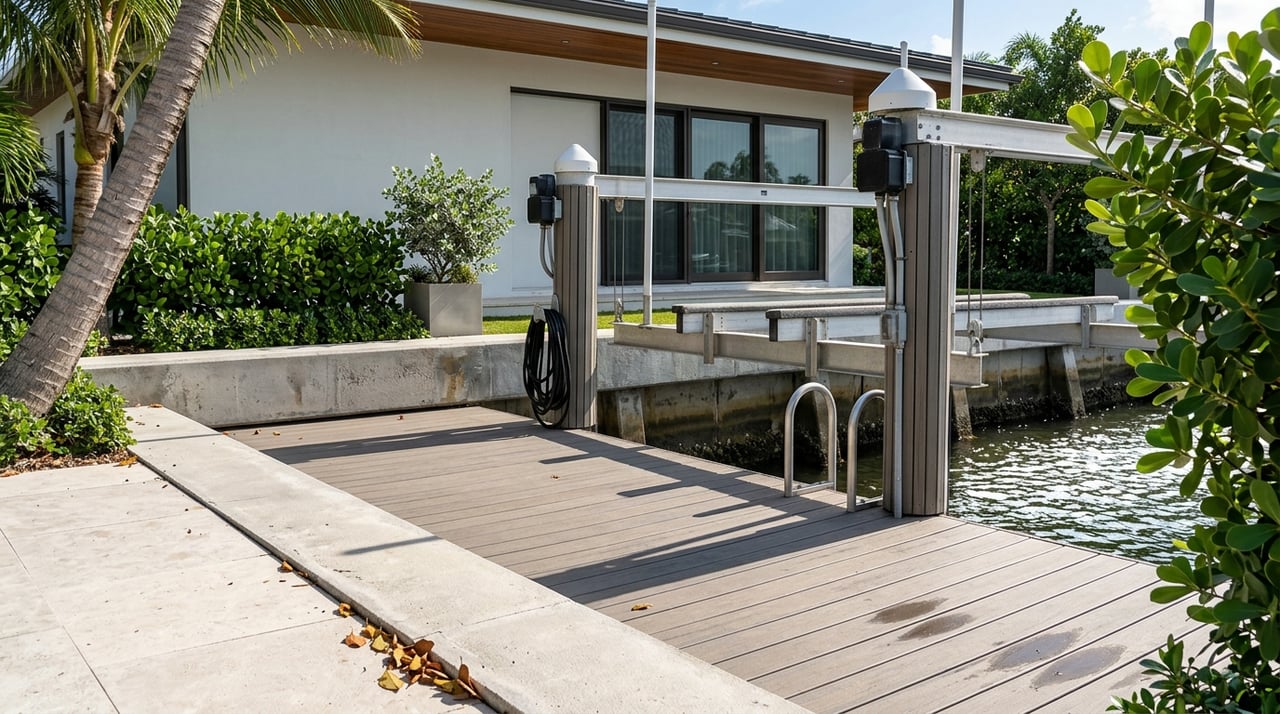
Recent Tropical Shores listing examples show how important marine infrastructure is in this neighborhood. Features mentioned in those listings include private boat ramps, boat lifts, sailboat-depth water, seawalls, Trex docks, jet-ski lifts, and newer dock improvements. One example references a working 16,000-pound boat lift, while another notes a 13,000-pound G3 high-speed lift.
These examples do not mean every property has the same setup. They do show a clear market pattern: waterfront value here is tied closely to the quality and condition of the marine systems.
That is why buyers should look at the dock, lift, and seawall with the same level of care they give the kitchen or primary suite. In a boating neighborhood, those features are part of the lifestyle and part of the long-term cost picture.
Your Canal Home Due Diligence Checklist
Before you buy a Tropical Shores canal home, make sure you review the boating side of the property in a practical way. A good checklist includes:
- Waterway used by the home
- Current route depth from dock to bay
- Tide sensitivity along the route
- Fixed bridge clearance, if any
- Dock layout and usable tie-up space
- Boat lift capacity and condition
- Seawall age, visible condition, and any known repairs
- Ramp access, if the property has one
- Fit for your current boat and future boat plans
This kind of review can save you from buying a home that looks perfect on paper but does not work well on the water.
Marina Alternatives for Some Buyers
Not every buyer wants to maintain a private dock. If you love the location and waterfront setting but do not want full responsibility for marine infrastructure, nearby marina options may be worth considering.
NOAA notes that the Port of St. Petersburg and the St. Petersburg Municipal Marina offer berthing, fuel, water, ice, launching ramps, and transient slips. For relocation buyers, seasonal owners, or anyone easing into the boating lifestyle, that can be a useful alternative.
What the Homes Are Like
Recent listing examples suggest that Tropical Shores is made up mostly of single-family homes built between the 1950s and late 1970s. Examples in current and recent listings include homes built in 1950, 1952, 1953, 1960, and 1979. Reported living areas in those examples range from about 1,186 square feet to 1,989 square feet.
That points to a neighborhood with a strong mid-century foundation, along with renovations and occasional later infill. For buyers, this can mean a lot of character, but also a need to look closely at updates and major systems.
Waterfront Updates Often Matter Most
In Tropical Shores, the most important upgrades are not always the most visible ones. Recent listing examples highlight features such as hurricane windows and doors, new roofs, updated HVAC systems, new dock work, and seawall replacement.
That matters because waterfront ownership is about both enjoyment and resilience. A beautifully updated interior is great, but the marine systems and weather-hardening features can have just as much impact on day-to-day comfort and long-term ownership.
How Lot Orientation Affects Comfort
Lot orientation can shape how a home feels throughout the day. The Department of Energy notes that east- and west-facing windows bring in morning and evening daylight, while west-facing openings can admit significant summer heat. It also notes that coastal homes often use water-facing openings to capture cooling breezes, and that shade on the west side can help with lower afternoon sun angles.
In practical terms, that means a west-facing yard or lanai in Tropical Shores may feel hotter later in the day. A bay-facing or east-facing lot may feel brighter earlier and sometimes breezier depending on the home’s setup. If you spend a lot of time outdoors, this is worth paying attention to when you tour homes.
Who Tropical Shores Fits Best
Tropical Shores can be a strong fit if you want private-waterfront living in St. Petersburg and you value being near downtown. It may be especially appealing if your boating style centers on shallow-draft or moderate-draft vessels and easy access to Tampa Bay.
It can also work well if you appreciate older homes with renovation potential or updated mid-century properties with marine improvements already in place. The neighborhood’s value is not just in the view. It is in the combination of water access, boating utility, and location.
A Smart Way to Shop Here
When you shop canal homes in Tropical Shores, try to look beyond the words “waterfront” or “boaters welcome.” Instead, ask specific questions about route depth, bridge clearance, dock setup, lift capacity, seawall condition, and recent storm-related upgrades.
That approach helps you buy with confidence. It also helps you match the property to the way you actually plan to live on the water.
If you want help evaluating Tropical Shores canal homes through a true waterfront lens, Brad Bess can help you compare boating access, property setup, and neighborhood fit so you can book the right tour with confidence.
FAQs
What makes Tropical Shores appealing for boaters in St. Petersburg?
- Tropical Shores offers a water-oriented setting in southeast St. Petersburg, proximity to Tampa Bay access points, and the appeal of private waterfront living near downtown.
What should buyers know about canal depth near Tropical Shores?
- Buyers should know that nearby waterways can vary in reported depth, and Tampa Bay itself is relatively shallow on average, so draft, tides, and the exact route from dock to bay all matter.
Are bridge clearances important for Tropical Shores canal homes?
- Yes. NOAA reports a 10-foot fixed clearance at a highway bridge near Bayou Grande, so buyers with taller boats should verify their exact route before buying.
What types of boats may work best for Tropical Shores homes?
- Based on reported channel depths and bridge information, shallow-draft and moderate-draft boats such as bay boats and many center consoles may be a better fit than taller or deeper-draft vessels.
What dock features are common in Tropical Shores waterfront listings?
- Recent listing examples mention features like boat lifts, private ramps, seawalls, Trex docks, sailboat-depth water, and lift capacities such as 13,000 pounds and 16,000 pounds.
What should buyers inspect besides the house itself in Tropical Shores?
- Buyers should closely review the dock, lift, seawall, route depth, bridge clearance, and storm-resilience improvements such as hurricane windows, doors, roof updates, and HVAC updates.
Are there marina options near Tropical Shores for boat owners?
- Yes. NOAA notes that the Port of St. Petersburg and the St. Petersburg Municipal Marina offer services such as berthing, fuel, water, ice, ramps, and transient slips.
What is the housing stock like in Tropical Shores?
- Recent listing examples suggest a neighborhood made up largely of mid-century single-family homes, with many built between the 1950s and late 1970s and a mix of renovated properties and occasional later infill.